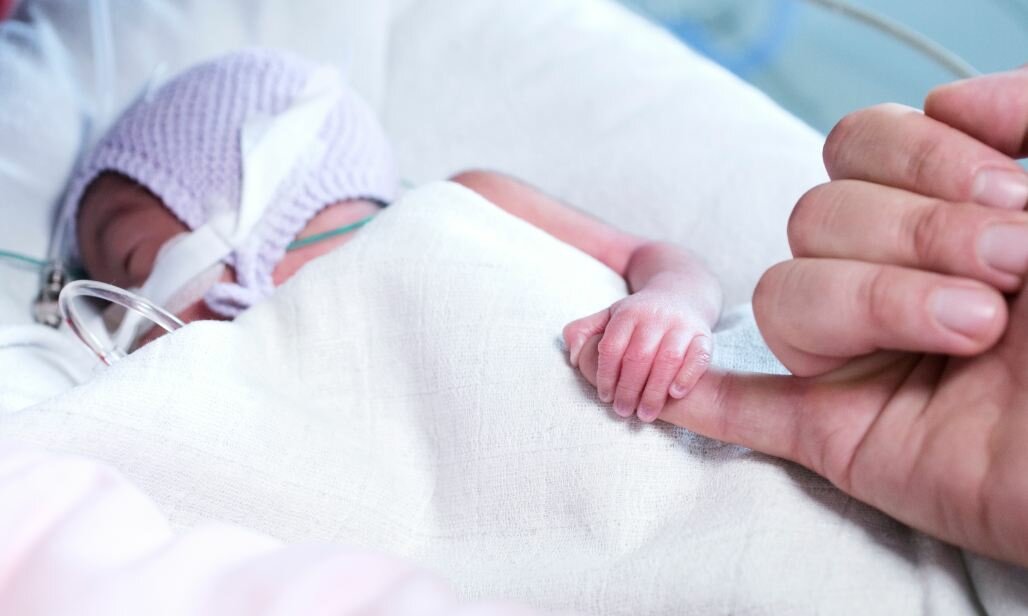
In the neonatal unit, which is a part of the children’s department, premature babies, sick newborn babies and certain children up to the age of one year, with the need for intensive care treatment, are admitted with their parents.
Congratulations, you’re parents now.
We look forward to working together with you helping care for your baby at this special time of life. Most families are not prepared for their newborn baby having to spend the first days or weeks of life in a neonatal care unit.
On the neonatal unit we use a family-centered approach, which means that we value the following four principles highly:
- That you and your baby as a family are treated with respect and dignity.
- That we as the staff share knowledge and exchange information with you in a way that is useful and meaningful to both parties.
- That you as parents participate and are as involved in the care of your baby as possible so you gain confidence in looking after them.
- That we as the staff share our professional knowledge with you and that you as parents share your knowledge, wishes and experiences regarding your child and family with us, so that we work towards a common goal (what we call partnership).
Cooperation and knowledge sharing during your child’s hospitalization
We are a large unit and we try our best to achieve as much continuity in care during your baby’s hospitalization (your stay with us) as possible. We establish a care and treatment team consisting of several nurses, one of whom is primarily responsible for nursing care and a specialist doctor who has overall responsiblility for your child’s medical treatment.
This team will be available to discuss your child’s condition, share information and professional knowledge about you child’s care and work together with you during your stay ont the neonatal unit.
Rounds and conversations with our doctors are planned according to you and your child’s needs. Families where it is anticipated that their baby will be with us for more than 5 days are offered a welcome/family meeting with our staff within 3-4 days.
Who works at the neonatal unit
The management of the unit
You are welcome to contact the management team of the unit, which consists of a unit leading nurse and a unit leading doctor.
One of the nurses will in agreement with you, contact your health visitor (If your baby is admitted for a longer period of time, a visit from your health visitor will be planned at the unit during your stay here, together with a discharge planning meeting with a member of your treatment team).
The unit provides twice weekly educational sessions (with various subjects) for all parents, grandparents and extended family or friends who are interested.
Lactation consultant
Our unit has several specialist nurses who are breastfeeding consultants and have a degree in breastfeeding techniques. They will lead an educational group on breastfeeding every second week.
Social worker
You can receive guidance from our social worker regarding maternity leave, social and economic issues related to your child’s hospitalization.
Physiotherapy and occupational therapy
The department’s physiotherapists hold parent teaching or occupational sessions every third week in our unit. In certain cases the physiotherapist will see the family individually.
Families whose baby is born earlier than 32 completed weeks of pregnancy are currently offered a session with a physiotherapist and occupational therapist when the baby is around 4 weeks old.
Midwife
If you wish to see the midwife or obstetrician who participated at the birth of your baby, our staff can help you get in touch with them and plan this with you.
To become a real family on the neonatal unit
You are, as your baby’s parents, naturally the most important people during your baby’s hospitalization. We do our very best to make sure that you can be with your baby for 24 hours a day even when you still are admitted of the maternaty ward.
Some (usually premature) infants are able to go home before being completely discharged from our unit. This is called ”early home discharge” (in Danish Tidligt Hjemme Ophold or THO). This is possible when the baby is medically stable but still has a feeding tube and needs to learn to feed from the breast or a bottle.
Visitors
Siblings to your newborn baby are as you an important part of their life. Siblings are welcome to stay overnight as long if you have a single room on the unit.
Your family and relatives are always welcome, when it suits you and bearing in mind the condition and needs of your child. Please remember that all the other babies on our unit are born prematurely or are sick at birth. They and their families need peace and rest.

The living room/kitchen
In the living room and kitchen on the unit ward it is possible to have guests, prepare and eat food and for older siblings to play, use the computer, etc. It is your own responsibility to clean up after yourself in the common area.
Food during your child’s hospitalization
While your baby needs care on our unit, we can offer you 3 meals a day for one adult for free. For further information see our menu card.
Besides this, Hvidovre hospital has a cafeteria (7-Eleven) for patients and relatives. Open all hours.
Hygiene
The babies at our unit are very sensitive and do not have a fully developed immune system yet. Thorough hand hygiene is therefore very important (hand disinfection or hand washing) in order to reduce the risk of infection. It is also important that your guests and relatives maintain a good hand hygiene and are not unwell when they visit.
Infant care, maturation and attachment towards your child
We do our best to give you the guidance and information that you need so you can take care of your baby as well as possible.
NIDCAP
At this unit we strive to cooperate with you in order to treat your new-born baby with the NIDCAP principles. This stands for New-born Individualize Development Care programme. It is internationally understood this individualized care and treatment for your baby is of significant benefit to your their wellbeing.
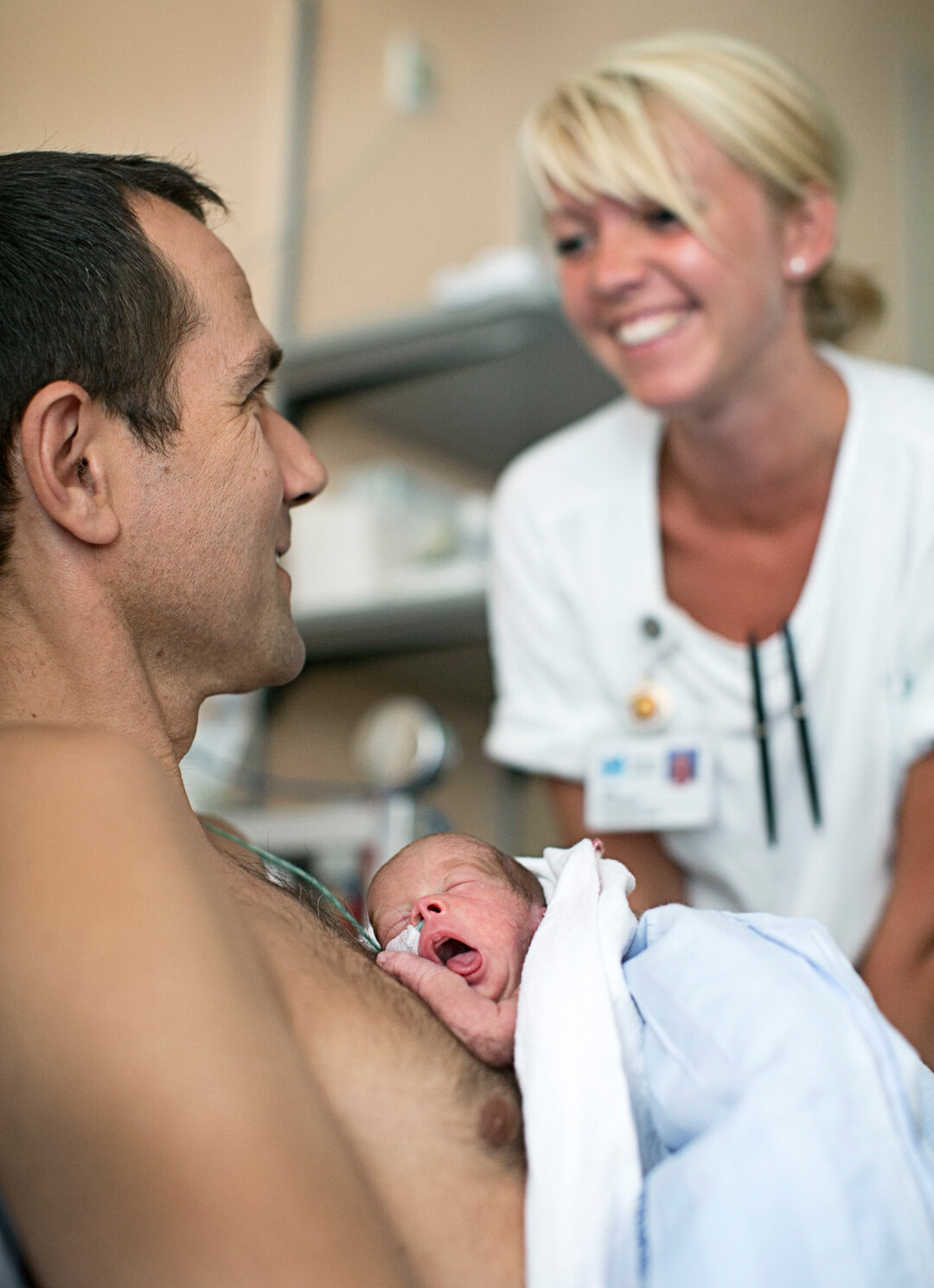
Give your baby skin-to-skin contact
All newborns benefit from skin-to-skin contact from birth and onwards and the method can be practiced by you as parents as well as siblings, relatives and even close friends. Research shows that skin-to-skin contact results in:
- Your baby’s temperature being more stabile.
- Your baby finding is easier to gain weight.
- Your baby’s breathing and heartbeat being more stable.
- Better parent-baby attachment, mother’s recover quicker after premature birth.
- That the mother produces more milk, with increased likelihood of successful breastfeeding.
- Your baby matures faster and has a higher IQ by the age of 1 than premature babies that spend all their hospitalization in an incubator.
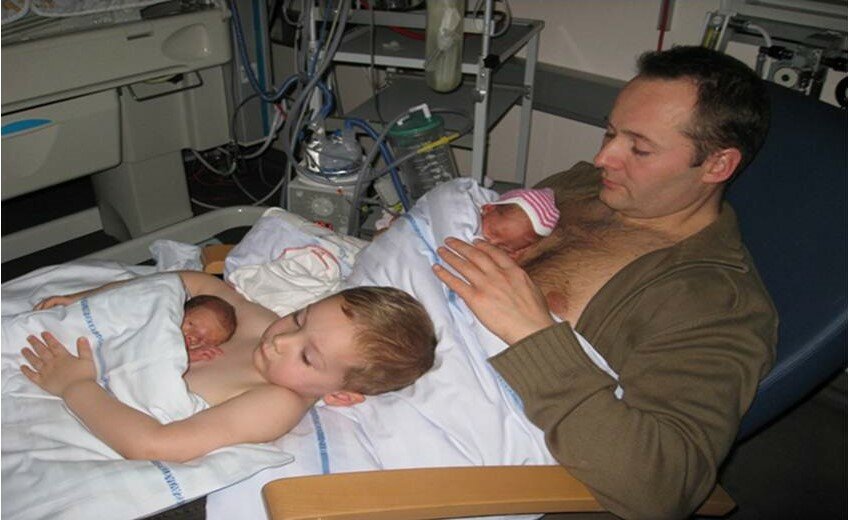
We recommend that you give your baby as much skin-to-skin contact as possible. Throughout the hours of both day and night as well as before/during bloodsamples are being taken.
You are welcome to bring siblings to the unit, so they feel a part of everything too.
Nutrition for your new-born baby
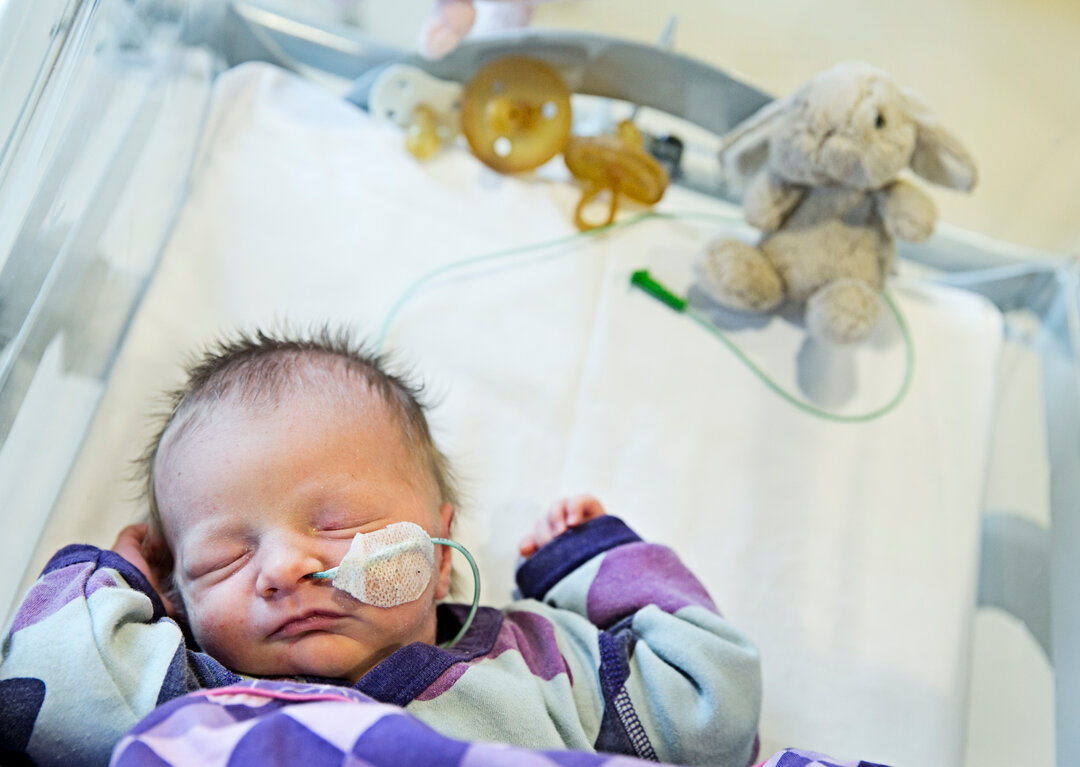
Most babies will, during the period of the hospitalization, need a feeding tube, and get their nutrition this way. Your baby will benefit from you, as parents, being around when he/she is fed, and that you at some point become the ones that give the milk via the feeding tube. The baby will be aware when he/she receives a feed. You can accommodate your baby’s needs by either skin-to-skin contact or by holding the baby during the feed. It is a natural part of being a parent to feed the baby.
Breast pumping, breastfeeding or bottle-feeding
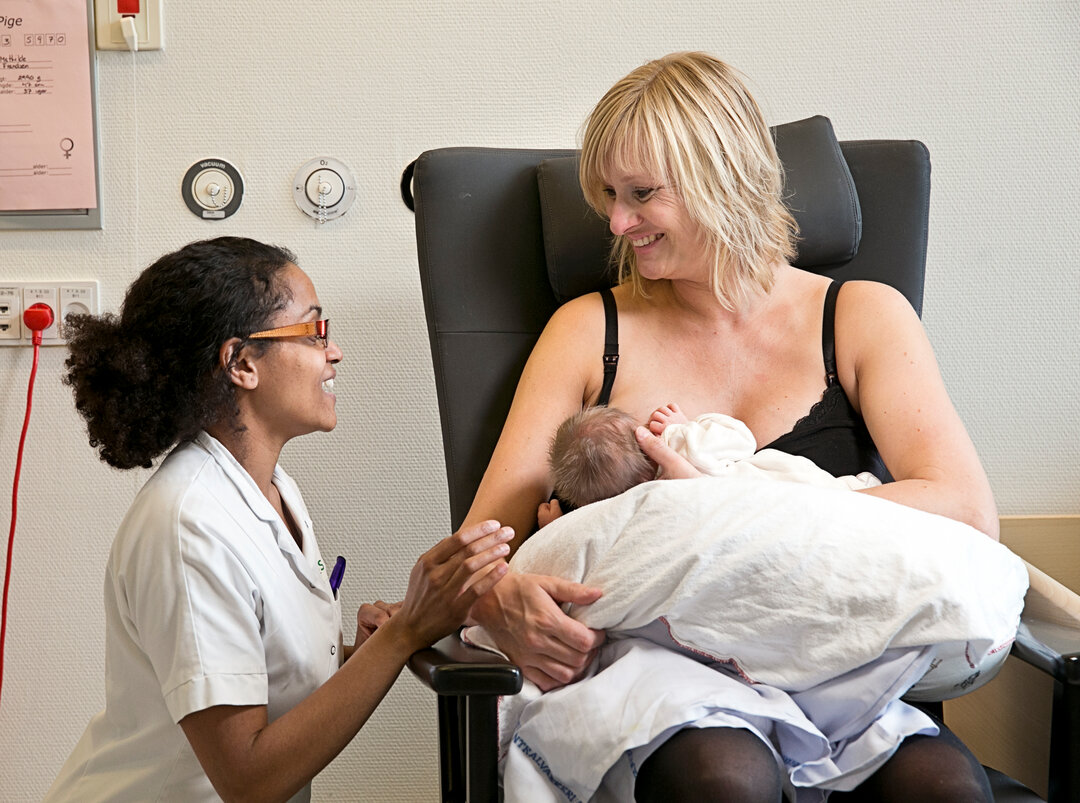
Until the mother’s milk is sufficient, your baby will need some other form of nutrition. You can choose to give breast milk donated by other mothers or formula milk. The breast milk from other mothers has been screened for known significant infections. To promote breast milk production it is ideal for the mother to use a breast pump approximately 6 hours after giving birth and subsequently every 3 hours , ie, 6-8 times during the day. You will receive relevant guidance on feeding regardless of whether you choose to breastfeed or bottle-feed your baby.
Hospital chaplain
Marianne Thestrup is the hospital chaplain/priest. She is also a qualified psychotherapist. It is possible to speak to her regarding both religious and other matters.
Further information and guidance about our unit is found on our homepage:
Date and time for the family/welcome interview:
_____________________________________________________
As preparation for the interview, you can write down your questions or anything else you would like to share with us:
_____________________________________________________
_____________________________________________________
_____________________________________________________
_____________________________________________________
_____________________________________________________
_____________________________________________________
_____________________________________________________
_____________________________________________________
_____________________________________________________
_____________________________________________________